• 1 Post
  • 202 Comments
Joined 4 个月前
cake
Cake day: 2026年4月20日

help-circle
  • I’ve heard before that powders/solids are generally easier to mix than liquids, because you can just have all the active parts go when water is added.

    With liquids (or really water-based solutions), there’s already water in there, so you have to design the reactions, so that they only start when a certain water concentration is reached, which is a lot more fickle and limits you in what you can do.

    I could imagine that giving powder an advantage, but I also don’t have scientific evidence. ¯\_(ツ)_/¯


  • Was recently talking to a working student at $DAYJOB about LLMs and wanted to make the point that the pay-per-use model shows they’re still a relatively new/immature technology. So, I likened them to mobile phone calls, which would generally cost you per minute in the early 2000s.

    Yeah, she had no idea what I was talking about.


  • This week, I was talking to someone at work about a topic they know a lot more about. It was a good exchange, I learned a lot. After the meeting, in the span of like half an hour, they sent me ten essay-length LLM outputs.

    And it’s just genuinely, like, what is the goal here? It’s cool that they want to provide additional reading material, but clearly they did not proof-read it, so I could’ve just asked an LLM myself, if I deemed that helpful.

    There is also just no chance in hell that I’m reading ten essays on the topic, especially when they’re as poorly written as LLM output generally is. I genuinely took a few minutes to try to skim it and I covered maybe 10% of the text, but learned hardly anything.

    I just really don’t understand this mindset of “I can generate a lot of text, so I’m being helpful by sending it to you”.


  • The section “4. What editing does to the mark” talks about that. Probably best to look at that illustration again, but basically those edits would interrupt consecutive runs of detectable text, but if a run is long enough, it can still be detected with statistical significance.

    So, it doesn’t have to check the ‘color’ of the words from start to end uninterrupted, but rather can also detect color sequences in the middle of the text.


  • My mum prepares them like this (when not eaten raw):

    1. Remove the woody skin of the bulb. You rather want to cut off too much than too little, because biting on one of those woody parts is really not nice.

    2. Cut into the shape of large french fries.

    3. Cook them in a small pot with just enough water to cover them, and a little bit of salt, some vegetable stock and optionally nutmeg thrown in as well. Lid on.

    4. Wait however long you want to wait. If you like a bit of bite, then shorter of course. But they’re also gorgeous when they’re tender.

    5. Thicken the remaining sauce. The kohlrabi gives off a really nice taste into the sauce, so you don’t want to drain the cooking water.


    Because we’re German, this was then served as the side-dish to the most boring food imaginable (noodles and probably some meat).
    I think it would go much better with rice. Well, and I’d go with soy chunks as the protein, but that’s personal preference.

    I also think caraway works really well with kohlrabi. And I could definitely see a spicy variant with some chili added into the sauce. Well, or a mustard sauce, of course:

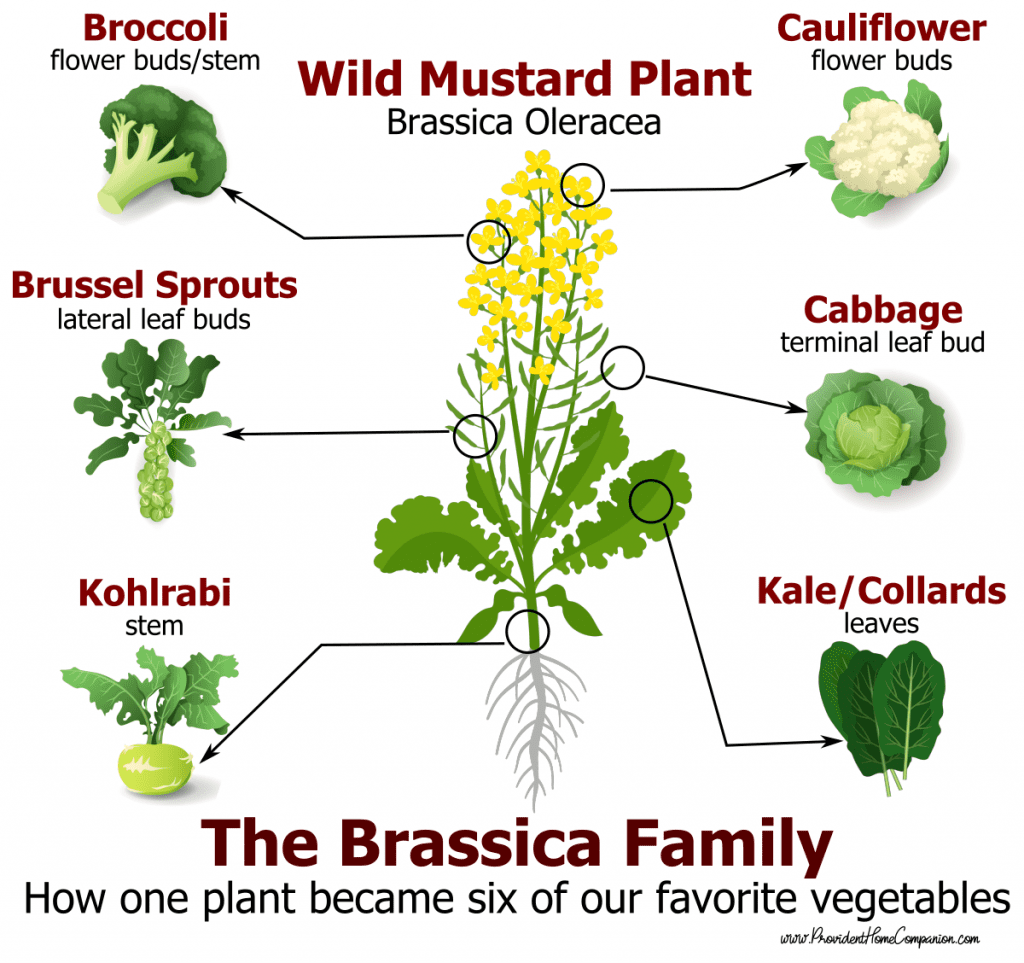
    Illustration of how the wild mustard plant was turned into broccoli, brussel sprouts, kohlrabi, cauliflower, cabbage and kale through artificial selection.